

Why “Like A Mountain?”
“Sit like a mountain. Sit with a sense of strength and dignity. Be steadfast, be majestic, be natural and at ease in awareness. No matter how many winds are blowing, no matter how many clouds are swirling, no matter how many lions are prowling, be intimate with everything and sit like a mountain.”
— Sharon Salzberg
I chose the name Like a Mountain because this teaching captures my hope for clients: not that difficult experiences disappear, but that people develop greater equanimity in the face of them.
To me, equanimity is the ability to stay present with challenging emotions and circumstances—to meet them with steadiness rather than avoidance, and with openness rather than self-judgment. It’s the capacity to remain grounded even when life feels uncertain or painful.
In therapy, this doesn’t mean becoming detached or unmoved. It means learning how to stay connected—to yourself, to your emotions, and to what matters—while moving through difficult seasons. This perspective shapes how I work: with respect for pace, attention to the nervous system, and an emphasis on presence over quick fixes.
The Meaning of Nature in My Work
I hold a deep respect for the role the natural world can play in fostering both equanimity and meaningful transformation. Being outdoors often invites perspective—helping us slow down, orient to what’s larger than ourselves, and reconnect with a sense of steadiness that isn’t dependent on circumstances.
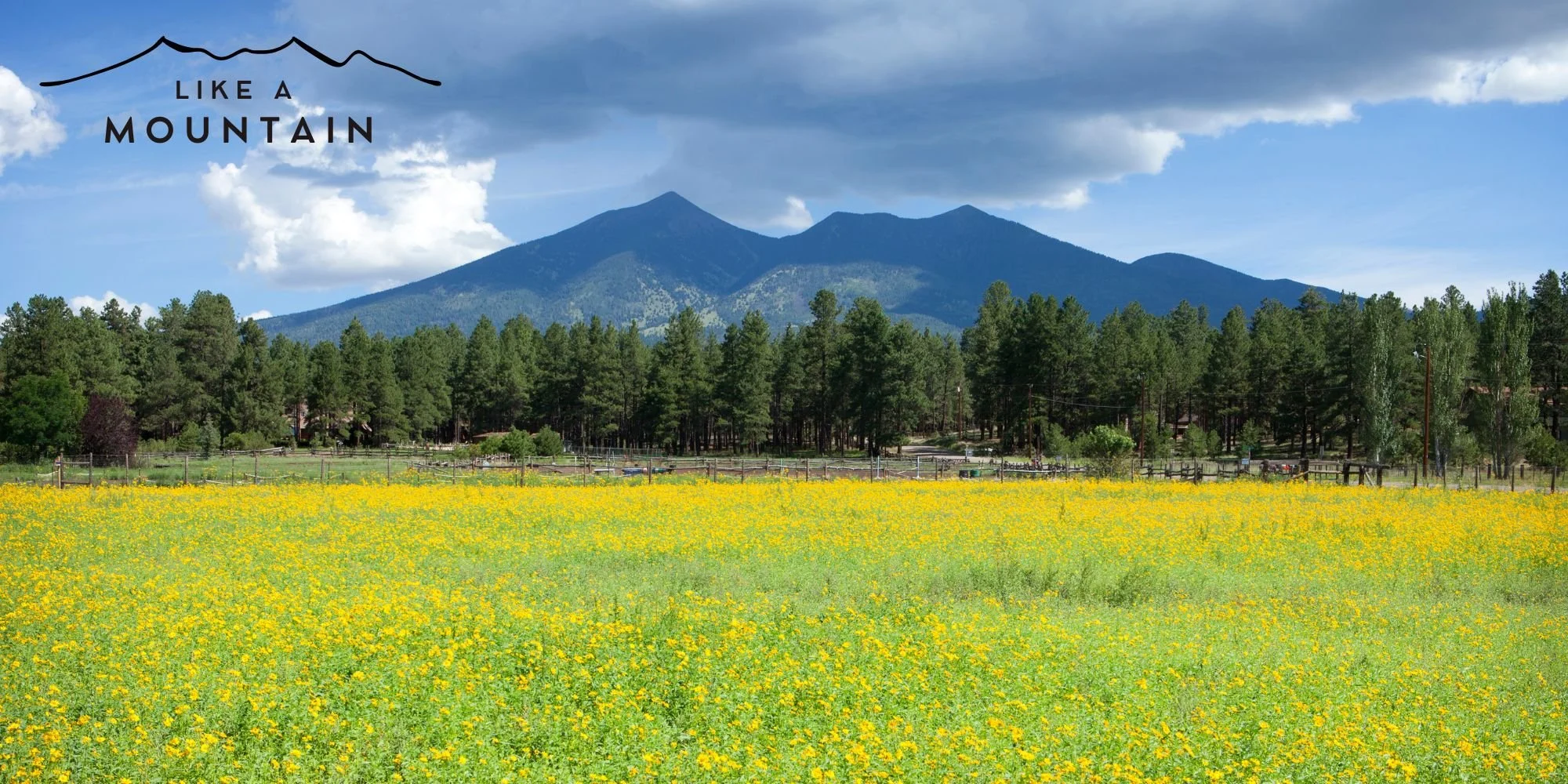
The logo for Like a Mountain is an outline of the San Francisco Peaks north of Flagstaff. This landscape feels deeply meaningful to me, and it has been held as sacred by Indigenous peoples for thousands of years. That history matters. It calls for respect, humility, and care in how we relate to both place and one another.
In my work, nature isn’t a backdrop or a technique—it’s a context that can support grounding, reflection, and forward movement. My hope is that clients experience both steadiness and possibility: the capacity to remain present with what is, and openness to what may still change.